60 Years of Redman Wines
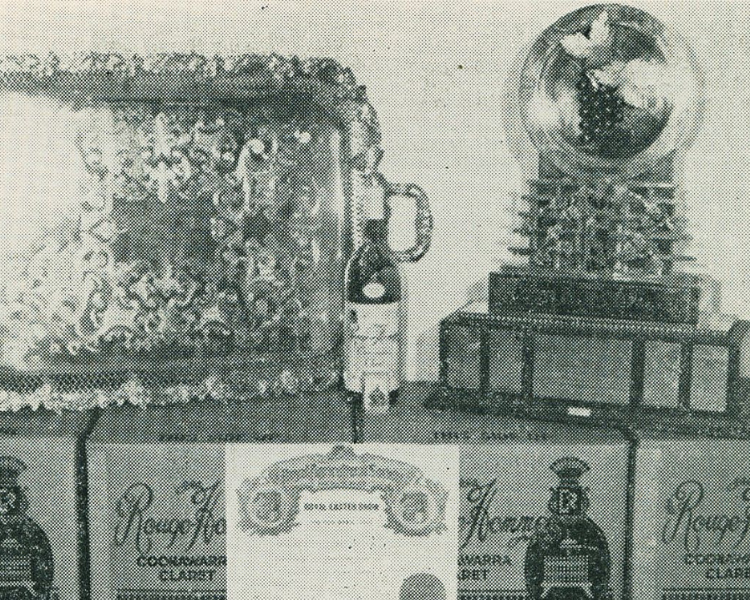
Sixty years ago, in 1966, Owen Redman set out to build something of his own in Coonawarra, following the legacy his father Bill had started when the Redman family began making wine in the region in 1908. What started with 40 acres of vines, bought within days of the Rouge Homme sale, has grown over four generations into one of the region’s most enduring family wine stories: a world tour exploring the great chateaux, small fermenting tanks and even smaller beginnings, and a Cabernet and Shiraz style that has barely wavered and remains true to the family’s commitment to make exceptional wines from the home of Coonawarra.
As the Redman family celebrates 60 years of the Redman brand, this is a look back at some of the defining moments that make the family such a critical part of the fabric of Coonawarra.
The early days of Redman Wines
Following the sale of Rouge Homme to Lindeman’s in 1965, it was not long before the Redman family purchased land in Coonawarra. Within days of the sale, Owen Redman bought 40 acres of vines from a neighbour, Arthur Hoffman, whose father had long had land in the region.
Bill Redman’s younger son Don set up as a wine merchant in Adelaide and ran Redman’s Bodega in Glen Osmond Road. Bill Redman stayed in Coonawarra and lived with his daughter Nancy and son-in-law Eric Brand.
In 1965, Eric Brand started making wine for the first time. He arranged to sell his wine to Thomas Hardy and Sons Ltd and also bottled his own ‘Laira’ label. Their property included the original vineyard of Captain Stentiford, who retired from the sea in the 1890s. Laira was the name of his ship.
In 1966, 1967 and 1968 Owen made the wine from his vineyards in Eric Brand’s cellars. In those years, he only made 2,000 gallons a year and sold the rest of his grapes to Lindeman’s. Len Evans, while Cellarmaster of The Bulletin, wrote of the 1966 Redman vintage:
“The colour is deep and intense, being quite the darkest red I’ve seen for some time. The nose is tremendous, with a full, rich Coonawarra quality of the best kind. The fruit combines excellently with the small oak in the nose.”
Brands Laira, as it’s now known, is still located next to Redman Wines’ current cellar door, a simple walk along the Coonawarra Walking Trail. It’s no longer owned by the Brand family, now part of the Casella Family Brands portfolio. The original cellars can still be seen inside the newly renovated site.
Owen Redman explores the great wine regions of the world
Immediately after the sale to Lindeman’s, Owen Redman went on a world tour of wine-growing districts. His travelling companion was George Fairbrother, a well-known wine judge. Together, they tasted their way around the globe. First, they went to California, where in the Napa Valley they saw a winery that produced 42 million gallons a year, more than the entire output of wine from Australia at the time. They also visited a vast winery in Modesto, which produced a colossal 84 million gallons a year and, according to Owen’s notes, resembled an oil refinery.
They went to Jerez in Spain, the Douro Valley in Portugal, and toured the celebrated chateaux of France: Yquem, Coutet, Haut-Brion, La Mission Haut-Brion, Cheval-Blanc, Ausone, Margaux, Beychevelle, Lafite-Rothschild, Mouton-Rothschild, Pontet Canet. On the Côte d’Or they visited Vosne-Romanée, the Clos de Vougeot, and Nuits-Saint-Georges; at Puligny-Montrachet they sampled the best white wine of the entire trip.
On the Rhine they saw Piesport, Bingen, Johannisberg and Bad Kreuznach, and the Pfalz. They also went to Switzerland and Italy as part of a tour that lasted six months.
Owen returned to Coonawarra most impressed by the small but exclusive chateaux, an experience that would go on to inspire the design of the new cellar door and winery. In 1967, he bought a further 10 acres of Coonawarra land from Charlie Skinner to plant more premium Cabernet Sauvignon and to serve as the site of the new winery.
A new winery for Coonawarra
The new cellar door and winery were of great significance to Coonawarra, with Redman becoming one of the first in the region to have a modern, on-site winery. The cellar door scene in Australia was also in its infancy at the time, and the new building offered visitors a rare glimpse of the winemaking process, along with the chance to taste and buy the wines.
The building was designed by architect Rod McDonald, a cousin of Edna Redman, who worked for the Adelaide firm Woodhead Hall Architecture. It was a simple structure: plans were drawn up in 1967, construction took place during 1968, and the building was completed just in time for the vintage on 15 March 1969.
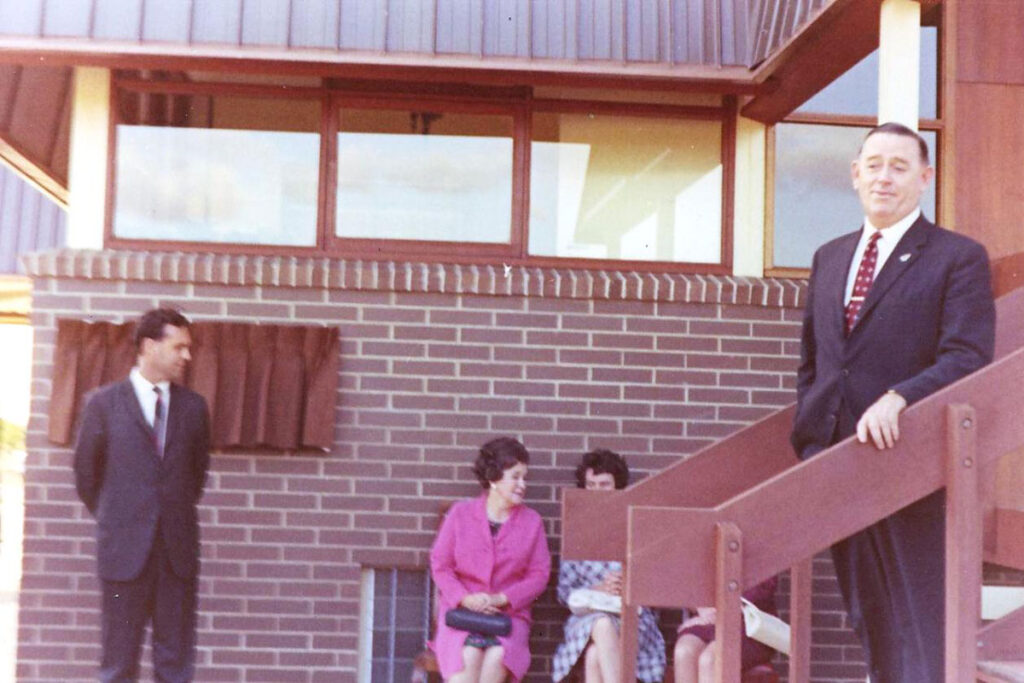
Owen Redman planned the winery based on the layout of the Rouge Homme winery, where he had worked previously, with a view to using traditional winemaking techniques.
Building a modern winery was not without its challenges. During construction, it was discovered that the underground aquifer sat quite close to the surface, meaning the underground cellar could only be dug to a depth of six feet, or just under two metres. It was originally built for barrel storage, but the family outgrew that small area rather quickly.
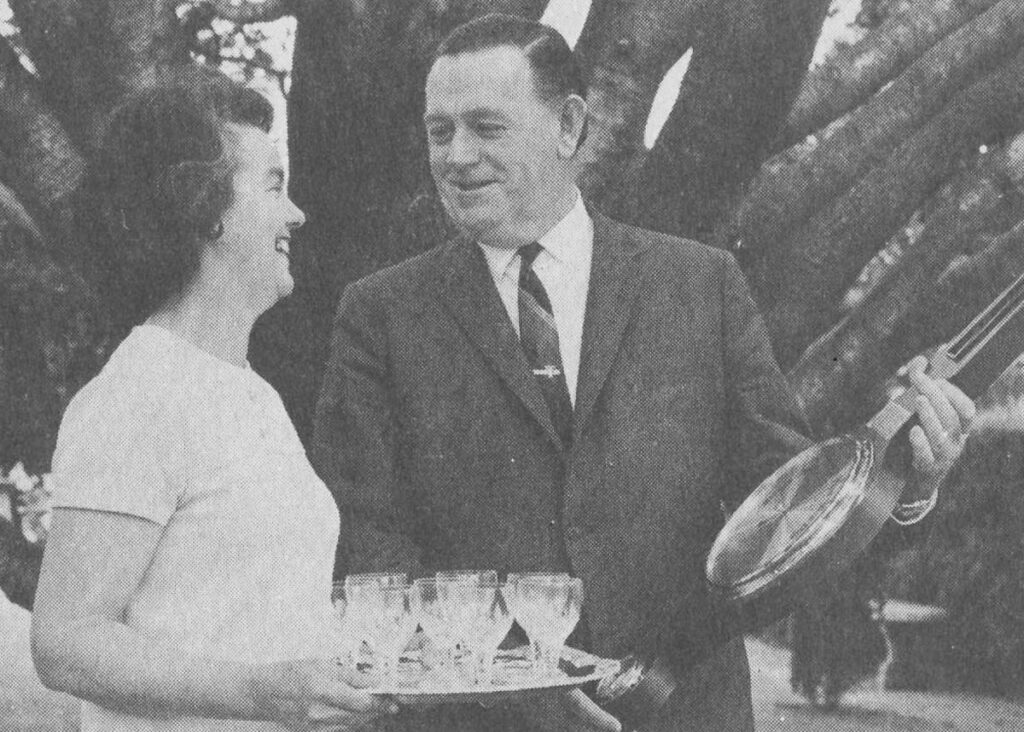
The winery and cellar door, then named Redbank Winery, opened on 15 March 1969 by the then Premier, Mr Steele Hall. Redbank Winery was equipped with small fermenting tanks, each holding 4–5 tonnes of grapes, and tank storage holding 13,000 gallons of wine.
The opening of a new cellar door was met with much excitement locally, though the launch itself was not as straightforward as it might seem. Months of delays followed, caused by waiting for electricity to be connected to the winery, as Coonawarra was only just being connected to the power supply at the time.
Small release, focus on Shiraz and Cabernet Sauvignon
Owen’s vision at the time was to bottle and release a small amount of straight Cabernet Sauvignon, noting that “whoever likes to keep the pure Cabernet for 30–40 years will be well rewarded.” This proved to be the case, as seen in the 50-year tasting of Cabernet Sauvignon that was held recently, a showcase from 1970 onwards.
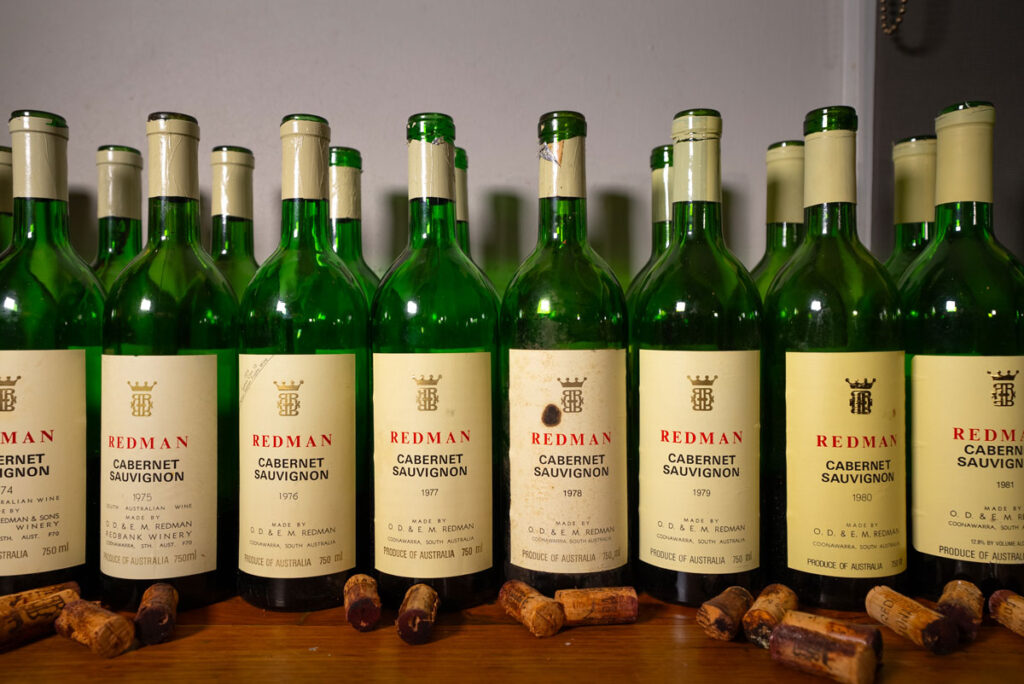
Tributes continued to flow in for the wines Owen made at the Redman winery. Andre Simon noted: “There is no doubt the wines from Coonawarra have a remarkable likeness in every way to those of the Medoc, in density of colour, in acid content and its reaction to the palate, in type and content of tannin and flavour.”
Dan Murphy noted in the Melbourne Age: “It has always been my contention that the similarity between the red wines of Coonawarra and those of Bordeaux is remarkable. In blind tastings I have seen more errors in mixing up a Coonawarra with a Medoc than any other confusion in identity.”
At that time, Owen and Eric Brand were among the smaller winemakers in Coonawarra, as most of the district was dominated by larger companies. Wynns owned 1,100 acres, Lindeman’s 530, Mildara 855, Penfolds 250, and Hungerford Hill 450. Altogether, approx. 3,200 acres in Coonawarra were at the time owned by grape growers and winemakers.
Extraordinary prices were being asked at the time, with one report noting $700 per acre. Bill Redman used to look on, bewildered. He used to dream of Coonawarra being a kind of Medoc of the Southern Hemisphere, but he never really expected it to happen.
The third-generation steps in: Bruce and Mal Redman join the family business
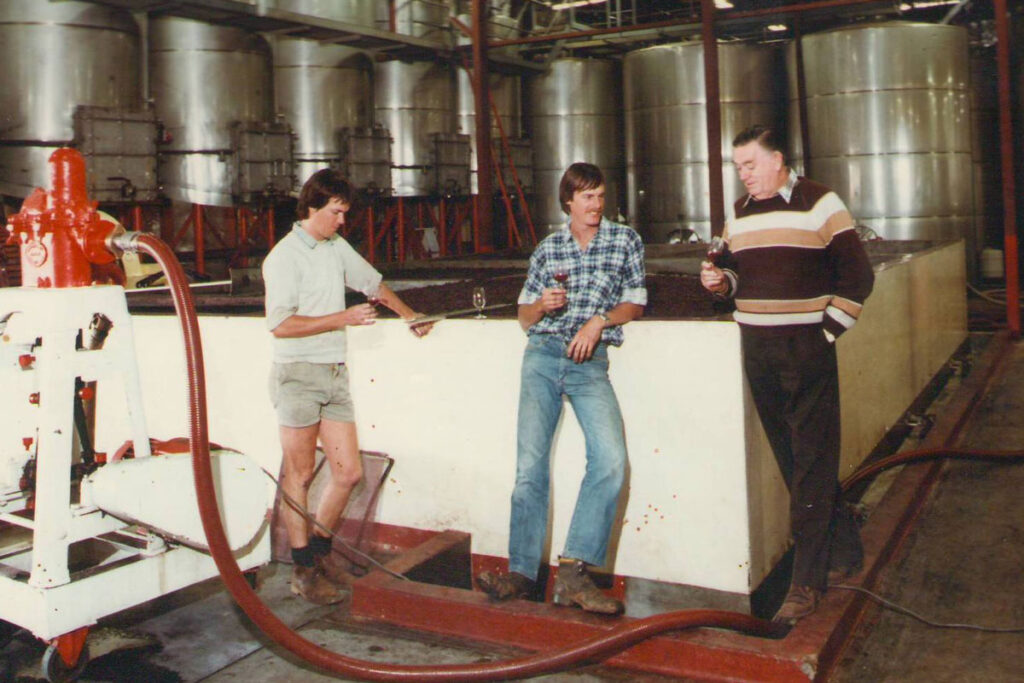
Bruce Redman joined Redman Wines in 1982, alongside his brother Mal, after working in Australia and abroad. Their father, Owen, retired that year, with his sons now taking the reins.
Together, Mal and Bruce slightly evolved the Redman wine style, drawing on refrigeration, advances in technology, cultured yeasts and a wider choice of oak to lift quality where it mattered. Crushing the grapes in the field and keeping a tight focus on red wine production has meant a consistent, considered style, vintage after vintage.
Over the years, Bruce and Mal have also introduced smaller oak barrels, improved fermentation draining, and refined their filtration techniques. Technology has opened up a broader range of cultured yeasts to choose from, and the move to screw caps across the range, which Redman began transitioning to from the 2014 vintage as the wider Australian wine industry embraced the format, has helped safeguard consistency and quality in every bottle.
But both Mal and Bruce agree that it has been important to maintain the Redman style and consistently produce red wines true to the original Redman vision: medium-bodied, elegant wines that reflect their Coonawarra home.
The family planted Merlot in 1986, introduced a Cabernet Merlot blend in 1990, and added Riesling to the lineup in 2005, broadening the family’s offering while never losing sight of the reds that built the name.
In 2008, the brothers introduced the flagship wine, The Redman, to celebrate 100 years of the family growing grapes and making wine in the region. They continue to refine this special wine as an homage to the family name, with the blend changing depending on the vintage.
While the domestic market has always been the heartland of the Redman business, small parcels of wine have found their way to drinkers well beyond Coonawarra, with exports over the years to the UK, Canada, the USA, Japan, China, Taiwan, New Zealand and even France, a fitting export destination for a family whose style has so often been compared to Bordeaux.
The Redman wines have picked up their share of silverware along the way too. The 2010 Cabernet Sauvignon was named Best Cabernet Sauvignon and Best Dry Red at the 2012 National Wine Show, and the Provenance Red Wine took out honours at the 2017 Limestone Coast Wine Show , spanning the 2014, 2009 and 2000 Cabernet Sauvignons. Retrospective tastings, including the 50 Years of Shiraz and 50 Years of Cabernet Sauvignon tastings, have shown just how well Redman wines age, continuing to evolve in bottle while staying true to a style that has now been championed for four generations.
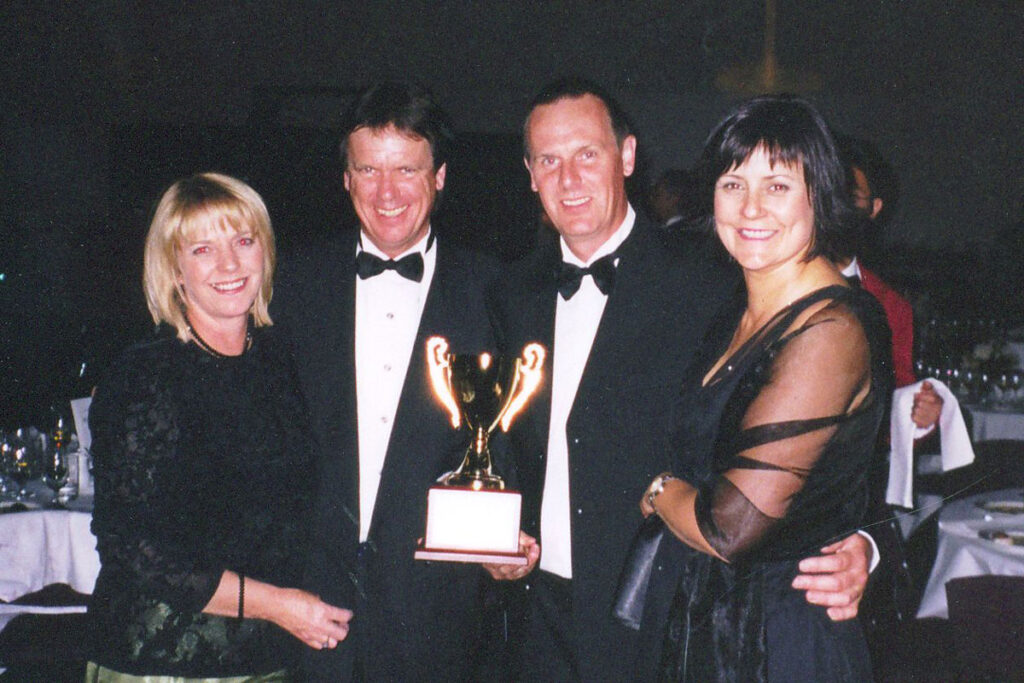
As an active member of the Australian wine community, Bruce has served a number of roles on South Australian boards and has travelled extensively promoting Coonawarra wine. In 2019, Bruce was awarded the honour of Coonawarra Patron for his services to winemaking in the region for over forty years.
Beyond the vineyard and winery, Mal has been equally committed to the district he calls home, serving on the Coonawarra Community Club Committee for many years, including a long stint as President, and remains a Life Member of the club today.
Reflecting on six decades of the family business, Bruce Redman says: “It is very humbling and rewarding to be part of a business that has been successful for sixty years. The wine industry has gone through a number of peaks and troughs over the past sixty years, and we are proud to have navigated through and maintained a consistency of quality and style that has resonated with drinkers across generations. It is satisfying to be able to hand over a successful and viable business to the next generation of Redmans.”
Dan and Mike Redman make their own mark
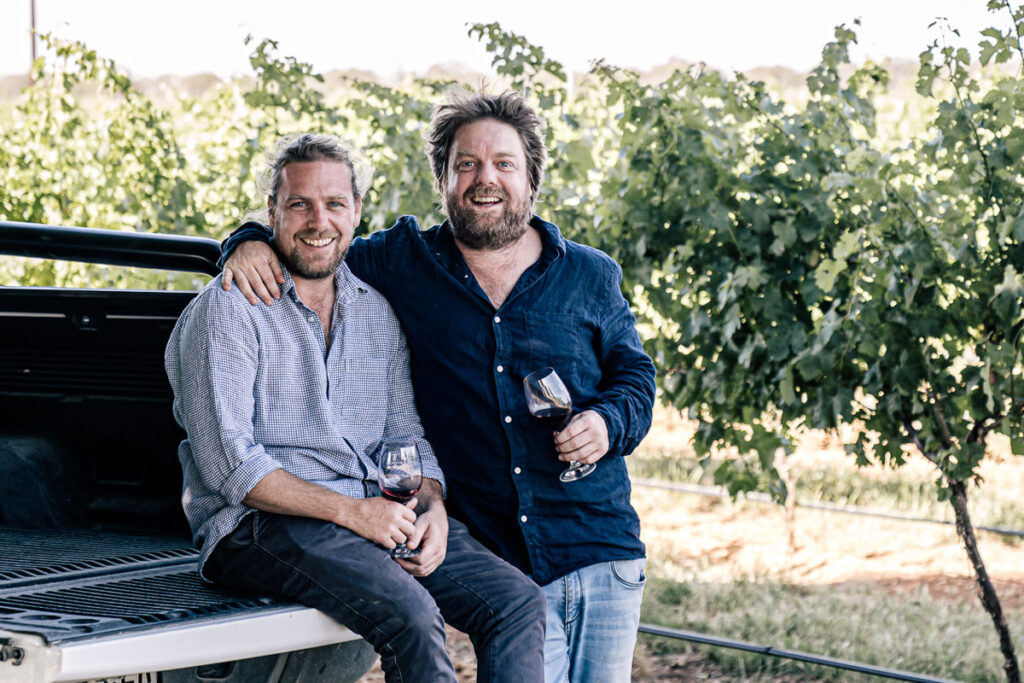
Dan Redman began working in the family business in 2008 after working vintages in the Barossa Valley, Nagambie in Victoria, Sonoma in the US, and Canada. He returned exactly 100 years since his great-grandfather Bill started making wine in Coonawarra. Mike Redman joined the family business in 2016 after working as a croupier in Adelaide, a waterski instructor in the US, and as a childcare worker in the ski fields of New Zealand.
Both Dan and Mike bought into Redman as co-owners in 2020. Dan Redman currently serves as the President of Coonawarra Vignerons.
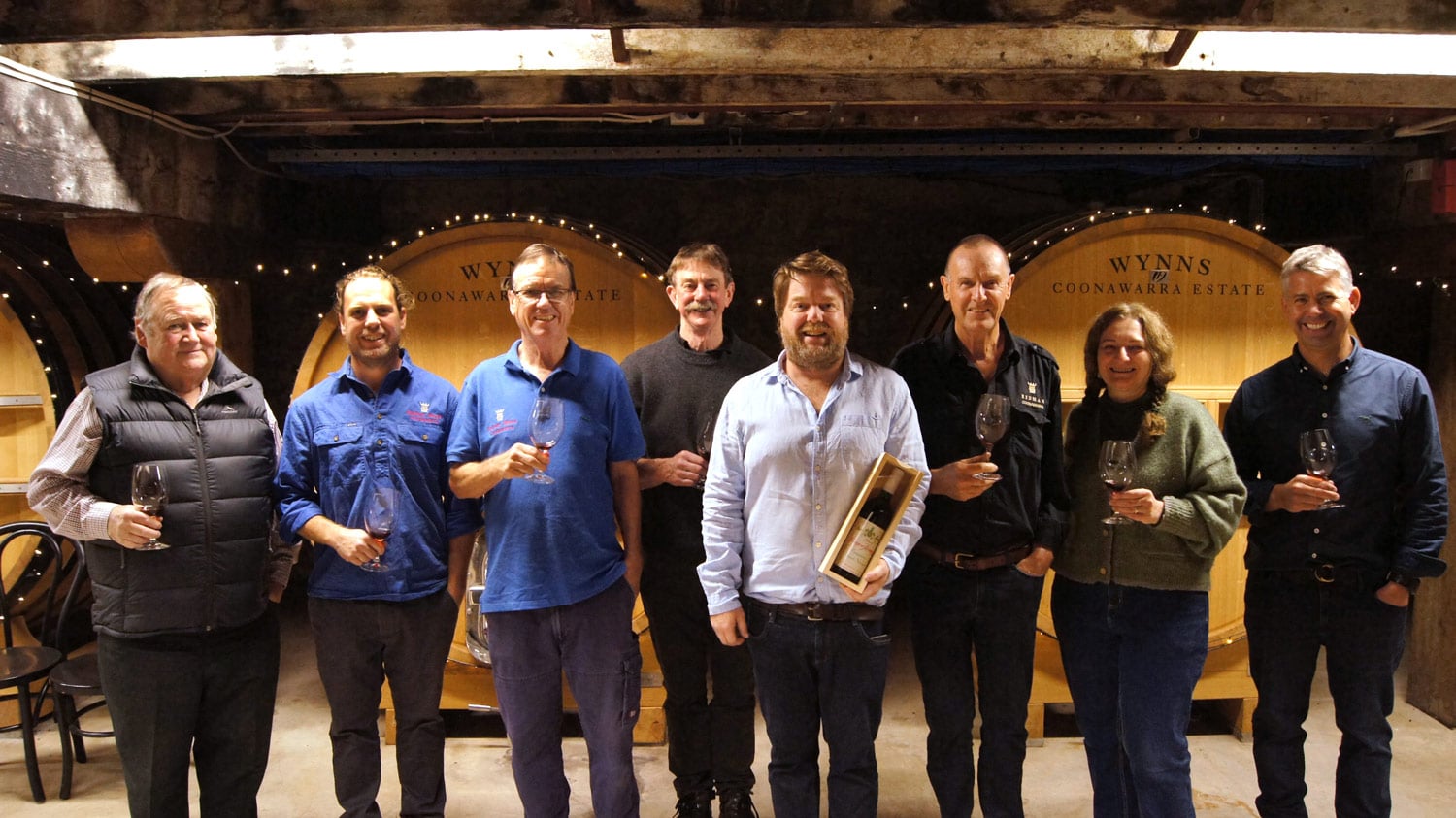
Working in a family business remains special for Dan and Mike, who spend their days alongside their dad Bruce and uncle Mal, continuing to bring to life the vision of making exceptional Coonawarra wines with a single-minded focus on reds. Mike shares what it is like to work in a family business in this short video.
The future of Redman Wines
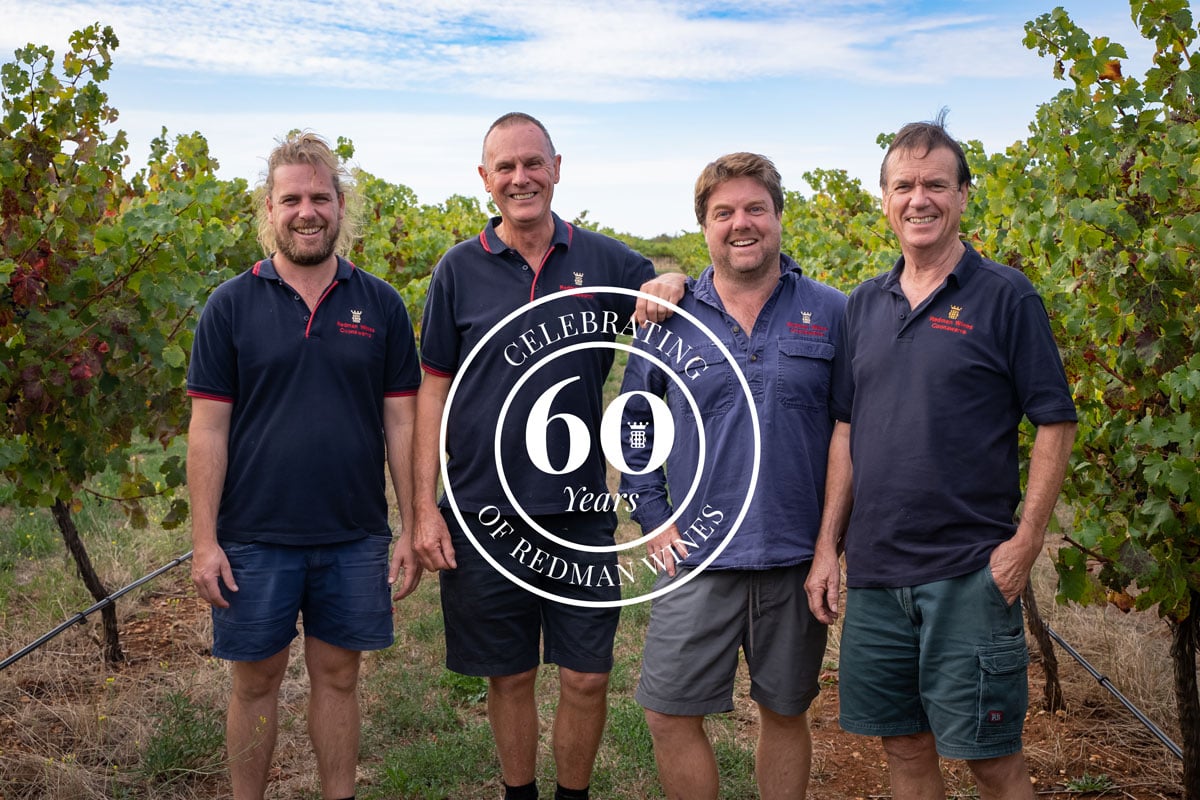
In the 60th year of Redman Wines, the brand continues to be family owned, with Mal, Bruce, Dan and Mike remaining hands-on in the business, supported by a few additional staff, including John Lavia, who has managed the vineyards since 1985.
The future is bright. With the return of the Rouge Homme brand to family ownership in May 2026, there’s much to celebrate in this milestone year. In October 2026, a new commemorative release of the 2024 vintage of Rouge Homme will arrive, made in the medium-bodied claret style that Owen Redman had always envisaged, though he never had the chance to release it himself.
A premium Cabernet Sauvignon, named The Long Game, will also be released in October 2026, a nod to the future in recognition of the world-class Cabernet Sauvignon that continues to be made in Coonawarra.
Another key project is ensuring Redman has sustainable vineyard and winery practices in place for years to come. “The impact of climate change is real, and we’re working hard to look at sustainable practices, such as solar panels, to drive electricity; drip irrigation for water conservation in the vineyard; and more evolved viticultural techniques to ensure the health of the vines,” says Mal Redman. The Redman’s are proudly certified members of Sustainable Winegrowing Australia.
Cabernet Sauvignon and Shiraz continue to be the single-minded focus of Redman; it’s what has held the family’s focus for four generations, and the medium-bodied and approachable style continues to remain relevant today. Forward-facing, though, the family is dabbling with some other varieties in the retro range, with a Sangiovese, Riesling and Rosé popular with those in the know.
Sixty years on from Owen Redman’s first vintage, the family’s story in Coonawarra continues much as it began: focused on quality, grounded in place, and passed carefully from one generation to the next. With Dan and Mike now shaping what comes next, and Rouge Homme back in family hands, Redman Wines enters its seventh decade with the same quiet ambition that built it in the first place.